Calling shotgun is typically a precursor to violence in my household, but never more so than a week with the Mercedes-Benz CLA350 4Matic.
The CLA EVs are the most affordable electric Mercs ever sold in Australia, and this one has 800-volt electrical architecture, 663km of claimed range, and YouTube and Angry Birds on the large passenger touchscreen. It’s meant to help kill the time when you can’t find that 300kW charger and have to sit longer than 22 minutes to get near-max electrons.
Instead, the siblings tried to kill each other for Shotgun. And not just for the Angry Birds – the back seat is the worst thing about this car. But that is not a new thing in compact sedan-land.
The dual-motor CLA350 is the non-AMG flagship of the now hybrid and EV only CLA range, and represents a $19,100 step from the CLA200 at $91,300 plus on-roads. But the near-$20K buys more power, all-wheel drive, and almost 200km more range, providing you don’t burn the electrons everywhere using that lovely, immediate EV torque. The more interesting gap is to the top-spec hybrid CLA, as the full EV is $7100 dearer and arguably much better.
Aimed squarely at the Tesla Model 3, Audi A3 and BMW i4, it houses the sort of electrical hardware that, until recently, was reserved for much larger cars with much bigger price tags. The CLA350’s two motors make 260kW and 515Nm, and it runs through Merc’s two-speed EV transmission. A short gear is there to handle initial acceleration, and a taller ratio takes over at about 110km/h to save energy on the highway. And it’s also good for under five seconds from 0-100km/h.
It is underpinned by 800-volt electrical architecture rather than the 400-volt systems far more common at this size and money. If you can find a 300kW-plus charger, the CLA350 will go from 10 to 80 per cent in 22 minutes. A 22kW AC on-board charger is standard and should fill it in roughly four hours.


| Specifications: Mercedes-Benz CLA350 4Matic | |
| Electric driving Range | 663km |
| Peak DC charging | 300kW |
| DC charging time (10-80%) | 22 minutes |
| Peak AC charging | 22kW |
| AC charging time (0-100%) | 3h 45min |
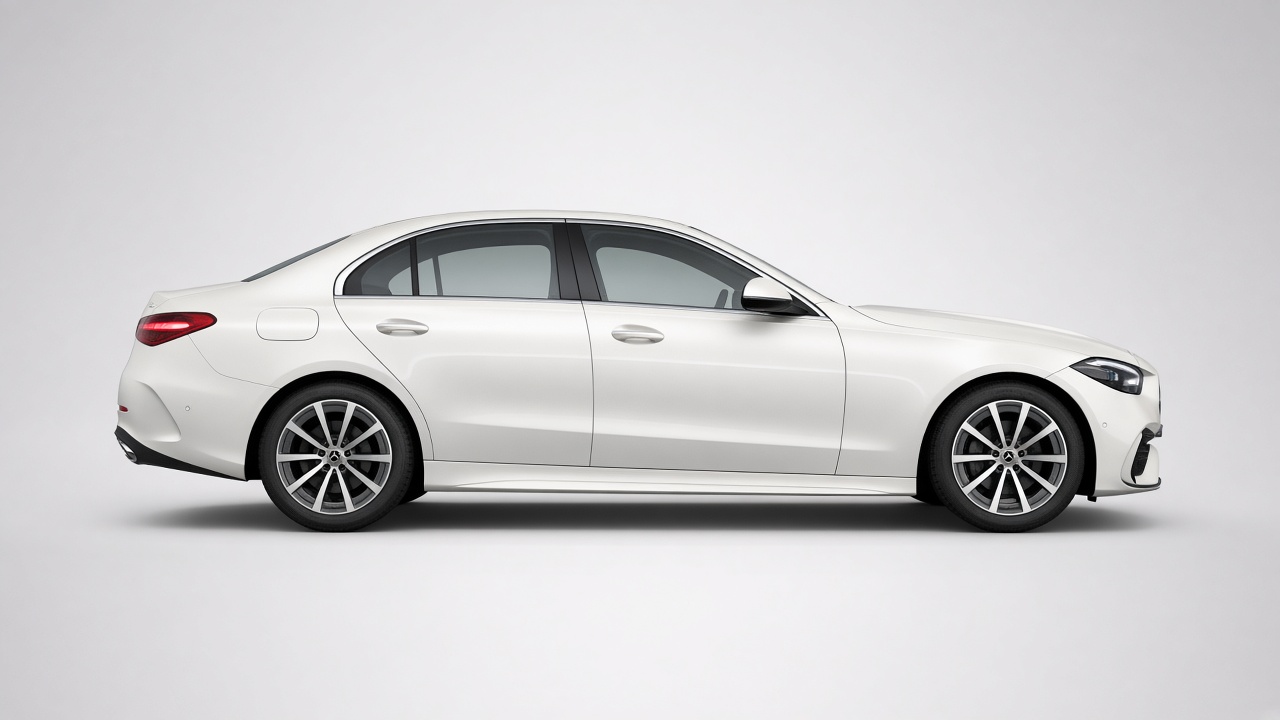
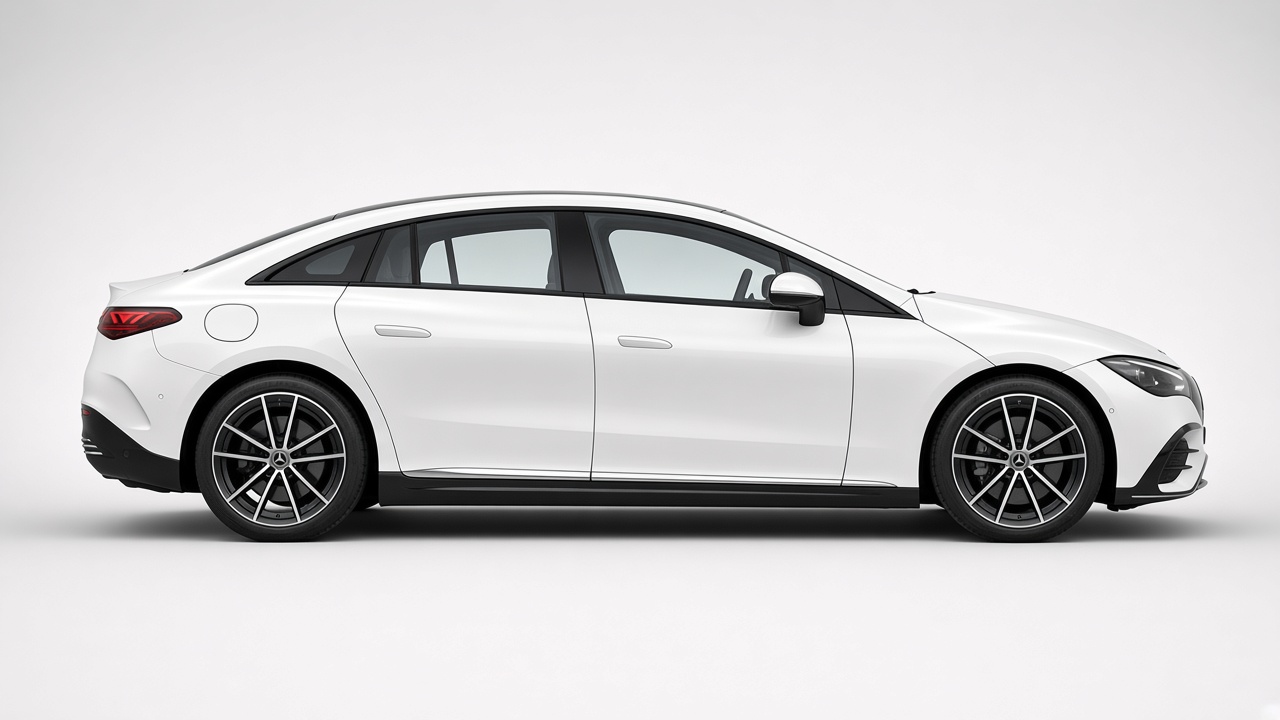
The styling borrows from the rest of the Mercedes family. There is an AMG GT-inspired rear end, frameless door glass, and retractable door handles; it’s quite the pretty little thing. Mercedes is determined not to give up on the sedan shape, even if this is almost coupe-like in its profile. In a world of EV SUVs and jelly beans, we are glad for something different.
Our test car was fitted with the Premium Package, which on the outside adds matrix LED headlights. These perform a sparkly light show at start-up and power-off, because of course they do. The package also swaps the illuminated passenger-side dash panel for a third 14-inch touchscreen next to the 14-inch central touchscreen and a 10.25-inch digital driver display. Plus a head-up display and a sweet Burmester sound system.
The interior would be quite dark if not for an enormous fixed glass roof. Standard equipment includes a wireless phone charger, plus wireless Apple CarPlay and Android Auto.
The front seats are heated, power-adjustable, and have extra pop-out under-thigh support. The bolsters are very cosseting; almost too much so. Perhaps there’s been a bit too much winter padding placed on my behind, but they certainly like to give the buttocks a good squeeze.


The MBUX software is quick to the touch and the icons are large. When parked, it will stream YouTube and Spotify or run Angry Birds, though the latter appears to be rigged in favour of the younger generations who played with it on test.
Netflix, Disney+, Amazon Prime, and YouTube video can only be played while the car is parked. That is fair enough for safety, as the driver can see the screen in their peripheral. If a video or game was running before you moved off, the screen goes black with a nanny warning about driver distraction. It doesn’t default to whatever colourful design you’ve chosen for the dash, so it looks rather bleak.
Locking out every video and game app on the move kind of defeats the purpose, and there are driver-proof screens in other cars that black it out for the driver, so why not this one?
Under the main screen sits a row of discreet individual buttons. Merc has also brought back its steering wheel rocker for the cruise control, and the roller for the volume, on its newer EV iterations. It’s a good decision given the demographic.
Google Maps is built in and plans charging stops into a route. The Google AI within the navigation works well enough, though full AI this is not. Which can be a good or a bad thing. The voice assistant, which Mercedes calls Automotive AI, wakes to ‘Hey Mercedes’ and slowly chews over and spits out things like Google Maps locations and the weather at your destination.
The 16-speaker Burmester system is a stunner. Seat sensors detect which seats are occupied and direct the sound to those passengers. There are six Sound Worlds, and the Intense setting unsurprisingly gives the most complete, immersive listening experience.


With so much attention on the front two seats and a smaller wheelbase than the similarly-sized C-Class, the compromise has to land somewhere, and that’s in the second row. It is comfortable enough for two, though knee space is tight. Carry three across, and it gets rather claustrophobic.
Headroom is also lacking, with the giant glass roof ending above the rear passengers’ heads. There is no retractable sunblind to block the light (nor to take out even more headroom), and the glass treatment apparently blocks 99.9 per cent of UV rays.
While it opens up the cabin nicely, and lifts the otherwise dark interior, a sunny excursion with three-up in the back had everyone wearing hats. The problem is the glare and mild heat that still filtered through the tinted glass, and glances in the rear-view mirror still revealed squinted eyes and rosy cheeks.
Countering the giant roof and lack of blind is timed pre-cooling. On said hot Sydney spring day, we returned to our open-air carpark after a soccer match to a near-freezing cabin. With ample charge and range to spare, there isn’t the range anxiety to have you question comfort features such as this.
Storage in a full car is another issue we faced. The higher, wraparound centre console offers storage underneath, but the door cards won’t take a big bottle, and the glovebox is about as big as the car’s manual.
The 405-litre boot is shallow but wide, with a really good opening for getting stuff in and out and seems bigger than its litreage suggests. There is another big 101L front boot area for the charge cables and the like, too.


Standard safety kit includes all of the usual suspects: adaptive cruise control, blind-spot monitoring, rear cross-traffic alert, and door exit warning. The lane-keeping assist is well calibrated, not overly strict, nor vocal in its alerts.
The warranty is five years and unlimited kilometres, with eight years on the battery. All standard fare, so no complaints there. But the servicing is a bit of a miss, and must be mentioned. A five-year prepaid servicing plan costs $4295, or $859 a year. Services fall due yearly, while some EVs stretch to every two years or 25,000km. That’s a chunk of time and money for a car with no oil or exhaust.
Get past that, and efficiency everywhere else is the CLA’s strongest suit. It’s so refreshing to get into a compact EV that has range to spare. We saw figures of 14.7kWh on test and never got near the chargers. That power use was handily broken down into driving at 77 per cent and climate control at 12 per cent. The other 12 per cent was, well, ‘Other’.
Regenerative braking comes in three settings: D+ for coasting, D for modest regen, and D- for single-pedal driving. There is nothing between D and D-, and another step would make for a smoother ride for the passengers. Still, D- does the one-pedal job well enough that most owners will modulate the one pedal most of the time.


On the road, the CLA is calm and confidence-inspiring, despite its big power stats and shorter wheelbase. Its two-tonne mass only makes itself known over rough, potholed roads. Even then, only bigger thumps get past the super-quiet cabin defences and shake the chassis a tad. The rest of the time, the suspension strikes a firm but easy balance between comfort and control
Noise isolation is excellent, with a bit of tyre roar but very little wind noise, which matters more in an EV with no engine to mask it. And don’t forget, this is a car with frameless doors.
The steering is accurate, and the car is easy to place, and Sport mode adds some nice weight, if not feel, to the wheel. Foot down, and the CLA350 delivers the push-you-into-the-seat shove you would expect from 260kW, and the rear-biased AWD system arrows the heavier EV body with alacrity.
The CLA350 does the expensive things well, from 800-volt charging to a sound system that knows where you’re sitting. The cheap seats are exactly that, and the second-row sitters are sure to tell you all about it. Probably from under a hat, and after they’ve lost Rock-Paper-Scissors for Shotgun. But sucks to be them; from the driver’s seat and passenger pew, this top-shelf CLA is just lovely.
| Key details: 2026 Mercedes-Benz CLA350 4Matic | |
| Engine | Dual electric motors |
| Battery | 85kWh NMC |
| Power | 260kW combined |
| Torque | 515Nm combined |
| Kerb weight | 2160kg |
| Drive type | All-wheel-drive |
| Transmission | Two-speed E-transmission |
| Length | 4731mm |
| Width | 1855mm |
| Height | 1465mm |
| Wheelbase | 2790mm |


The post 2026 Mercedes-Benz CLA350 4Matic: Call shotgun early appeared first on Drive.