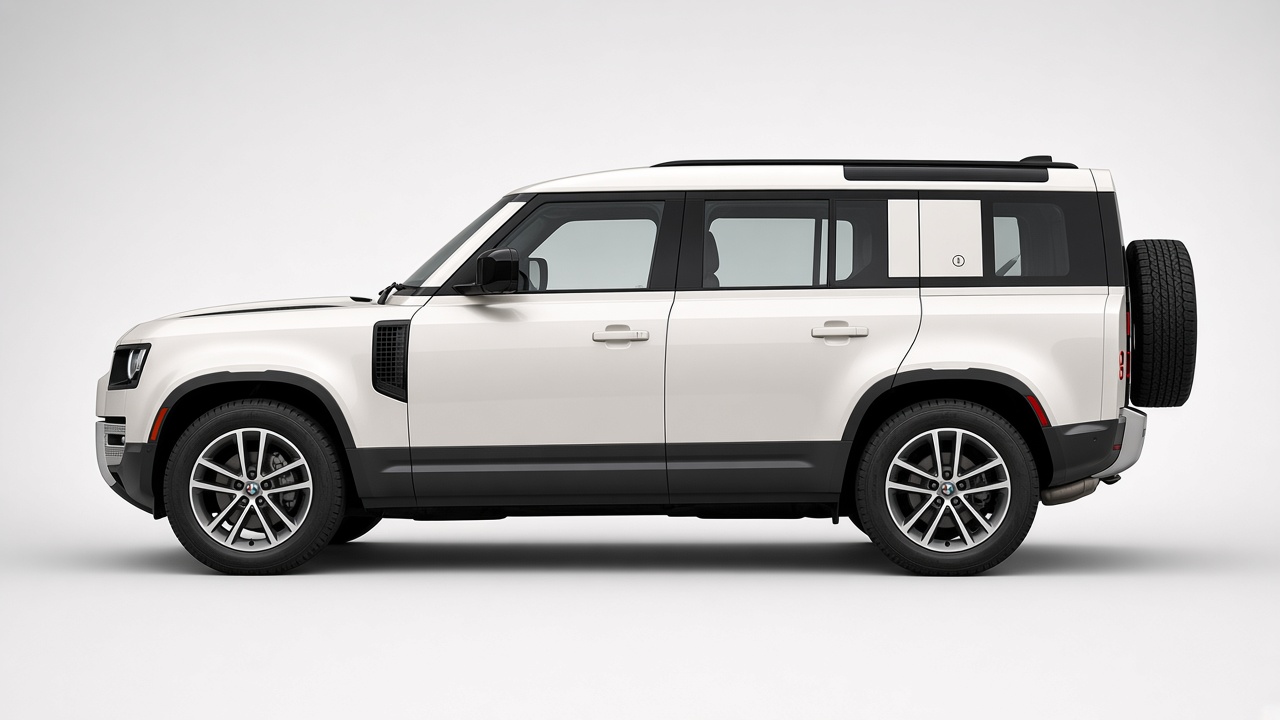
China is at the forefront of hybrid technology. Whether fully electric, range-extenders, or plug-in hybrids, the rapidly maturing Chinese automotive industry is in the driver’s seat.
One thing Chinese car brands generally don’t have though, is heritage. Storied histories of endeavour and enterprise. Chinese car brands have stories, don’t get me wrong. But not really in the same stretch of time as Land Rover, Toyota, or Jeep.
With the iCaur V27, we have an interesting mix on offer.
Box-shaped SUVs with flattish windscreens and bluff ends normally sing to the same hymn sheet under the sheetmetal: Torquey engine, often diesel, and a chassis that is designed around heavy-duty work: off-roading, towing, and general torture.
Such attributes often lead to less suitability for everyday driving. Rough ride, ponderous handling, and not a whole lot of
manoeuvrability.
So if you want something that looks cool, you will often be forced to live with the various compromises.
This is something iCaur wants to flip on its head. A so-called ‘future classic design’ dips in the history of box-shaped four-wheel drives, and drapes them over the top of modern electric and range-extender hybrid powertrains.
While the i Caur V25 is going to be the first to land in Australia, this V27 will have the opportunity to give LandCruiser Prado, Isuzu MU-X, and possibly Land Rover Defender owners pause for thought.
This large SUV is arriving in Australia as part of Chery’s ongoing roll-out of new brands for our market.
Strange name, right? It’s meant to be iCar, but copyright infringements got in the way. Chery chose to whack a u in the middle somewhere, keep the pronunciation the same and call it a day.
Details of exactly what we will get in Australia are light on. But we do have some facts, and we’ve had a short drive.
There’s not a lot of off-road space in Wuhu, the home of Chery alongside the Yangtze River in Anhui province.
About half an hour out from Chery’s hometown, we found a small patch of grass with a muddy track that loops around the edge. It’s not a thorough test by any means, but it is our first opportunity to get behind the wheel of this incoming SUV.
Here are some impressions.


This is not a LandCruiser Prado competitor, in its true sense. Towing might be limited to less than two tonnes by the time it arrives in Australia, and it doesn’t have a properly rugged four-wheel-drive system.
But in terms of interior space and appearance, the V27 ticks those boxes.
Acceleration and responsiveness are sprightly, and probably one of the biggest differences compared to a regular diesel-powered four-wheel-drive buyers might be used to.
While there is a petrol engine, it’s only there to charge the battery. It cannot power the wheels directly, but instead is there to increase the overall driving range of what is ostensibly an electric vehicle.
Our test drive was short, and only on a slippery dirt track strewn with puddles and bumps.
One small hump was easy enough to drive over, but approaching on an angle and going as slow as possible exposed a lack of traction quite quickly. As wheels lost their purchase on the wet surface, there was some scrabbling and wheelspin that became apparent as the vehicle got put under duress.
Don’t expect this vehicle to be a serious four-wheel drive, because it ain’t.
Otherwise, the V27 felt sprightly, and handled being bashed over rough roads well enough. Steering felt okay in this short experience, and there was enough suspension travel here to not constantly crash out through the undulations.
Unfortunately, we cannot speak to the driving experience outside of this. What it’s like around town or on the highway is less known at this stage.


We were able to crawl through the interior, which was typically impressive for what we expect out of these many emerging Chinese brands. There are nice materials in places, a massive 15.4-inch central infotainment display, and a smart little 8.88-inch display in front of the driver that is integrated into the dashboard.
The central console area has a mixture of physical controls and storage, with twin wireless charging pads and some extra underslung space for larger items. There is a pleasing blocky design going on inside, carrying a chunky appearance and with plenty of nice materials and details to ponder.
The second row is spacious and well equipped, offering more room than what you get in a LandCruiser Prado. The floor is flat here, there is loads of leg room, and the seat cushion is more comfortable than what you get in other Chery group SUVs.
The boxy design is great for visibility and headroom, and the V27 we saw had an interesting split sunroof design.
The iCaur V27 and V25 vehicles destined for Australia will all have a full-sized spare wheel mounted on the back, which is nice to have. This also means the V27 has a side-hinged tailgate, which could be a pain to open and close in tight spaces.
Boot space is quoted at 715 litres, which is impressive.


The range-extender powertrain of the iCaur V27 can be had in two different specs. There are smaller and larger battery sizes available, going from 20kWh and 95km of claimed range, up to 34kWh and 140km of EV-only range.
A 1.5-litre petrol engine lives under the bonnet, which is fed by a 60-litre fuel tank and can provide up to 900km of claimed driving range.
There’s an even longer-range version of this car with an even larger battery (51.2kWh), but we understand this model is not planned for the Australian market.
The iCaur V27 is coming to Australia, and provides an interesting option as the nation grapples with volatile fuel prices. It provides an option that is similar in aesthetic to some of our favourite SUVs, but not the same application.
For those who want something big and boxy, and are happy to side-step the off-road and towing capacity, they might find here a comfy and cheap-to-run SUV.
| Key details: | 2027 iCaur V27 |
| Engine | 1.5-litre turbocharged petrol range-extender |
| Battery | 34kWh LFP |
| Power | 105kW (petrol) 150kW (front electric motor) 185kW (rear electric motor) 335kW (combined) |
| Torque | 220Nm (petrol) 505Nm (combined electric) |
| Drive type | Dual electric motor |
| Transmission | Single-speed, reduction gear |
| Length | 5055mm |
| Width | 1976mm |
| Height | 1855mm |
| Wheelbase | 2910mm |
| Specifications: | 2027 iCaur V27 |
| Electric driving Range | 140km (claimed, CLTC) |
| Peak DC charging | 60kW |
| DC charging time (20-80%) | ~30min |
| Peak AC charging | 6.6kW |


The post 2027 iCaur V27 Review: China’s hybrid Prado competitor appeared first on Drive.