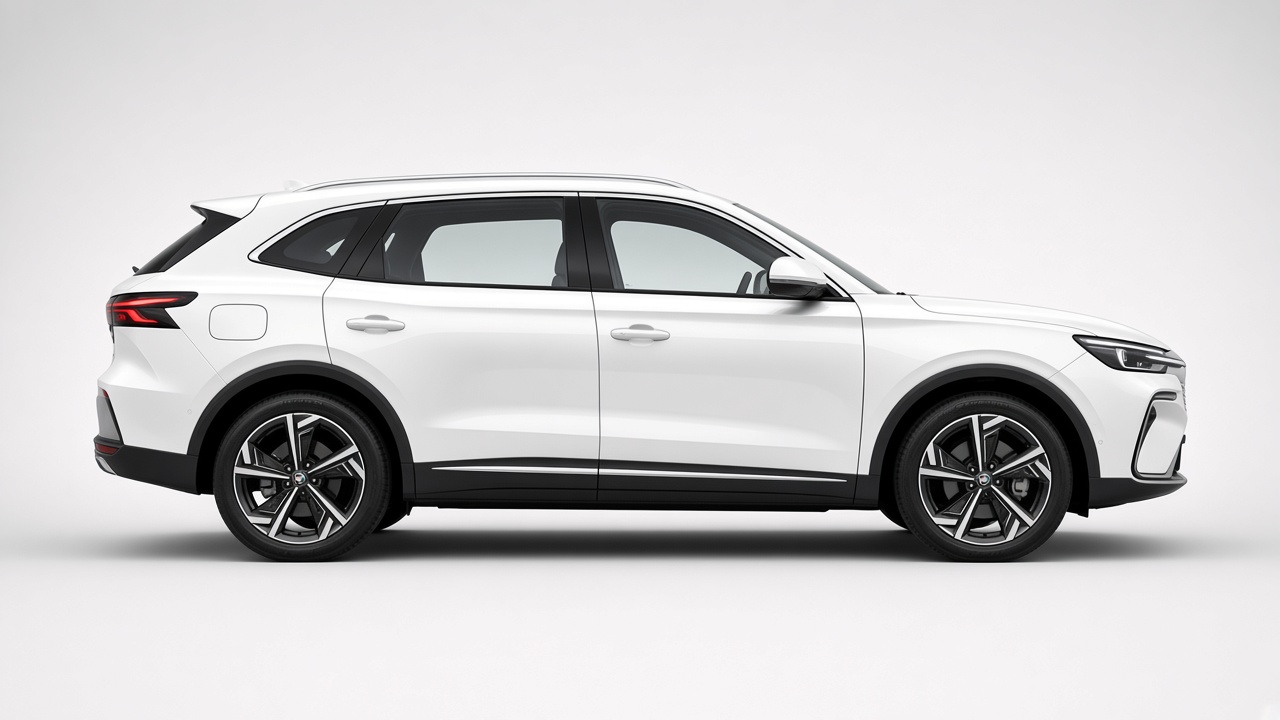
2026 MG 4 Essence 64
There are decisions from manufacturers that make even me, as a journalist, confused; my entire job is about knowing about every single new car on the market in Australia.
MG is the latest to confuse the average punter to no detriment but their own, launching a new MG 4 Urban alongside the existing MG 4. Sounds like a new trim level, right? Well, in this case it’s a completely different car – in fact, neither shares the same body shell, styling, or even powertrain.
It makes zero sense when there are an infinite amount of numbers and 171,146 words in the Oxford Dictionary, and yet the brand decides to sell two different cars with the same model name in the same small car segment.
When the question was asked why they gave two different cars the same name at the launch of the MG 4 Urban, the answer wasn’t exactly clear. I don’t believe that the brand is trying to confuse anyone with the two cars; I think it was supposed to come off as a homogenised lineup of – this one is for city driving, and this one is for more.
But, of course, it just comes off as lazy to name them the same, and no doubt the average buyer will see it as a means to confuse the purchaser on the showroom floor – especially when not only will the MG 4 remain on sale alongside the MG 4 Urban, it’s actually got a facelift.
Having driven both cars and spent an extended period with the MG 4 RWD, I can steer you in the right direction to make sure you don’t end up with the wrong MG 4.
Luckily for MG, the engineering department wasn’t as lazy as the people in the marketing department because this older rear-wheel-drive model is still an excellent buy.


What’s the difference between the MG 4 and MG 4 Urban?
The MG 4 RWD we are in is the first of the pair; it’s been on the market since mid-2023. Since then, it has gone through a number of small changes, but the car is still in its first generation.
The brand has thinned the herd of this model, offering two trim levels, with the version we are in being the $39,990 drive-away Essence with a 64kWh battery and 452km of range. A higher spec MG 4 XPower is also offered as an all-wheel-drive with double the power, though slightly less range from the same battery at 405km for $47,990 drive-away.
Moving down to the Urban, this one is also offered in two trims: the smaller 43kWh battery with 316km of range from $31,990 drive-away, and the larger 54kWh battery with 405km of range from $34,990 drive-away.
For all intents and purposes, we will compare the top-spec MG 4 Urban to the entry MG 4, considering the electric range of the top spec and the fact that the entry MG 4 RWD is a regular EV rather than some performance-based twin-motor.
Both cars fit into the same category of “small passenger”; in fact, they are very dimensionally similar. The Urban is actually just over 100mm longer and 30mm taller. Both now share similar interior designs, bar a few key changes in the MG 4 following the facelift, and both are five-seaters.
But that’s where the similarities end; not only do the two look completely different – they’re also opposites underneath. The MG 4 RWD has a bigger battery with rear-wheel-drive architecture and 154kW DC fast charging. In comparison, the MG 4 Urban sees a front-wheel-drive layout, and a smaller battery with a slower 87kW DC charge rate – making the more expensive MG 4 RWD faster to charge overall at a claimed rate of 10 to 80 per cent in 25 minutes, versus 30 minutes.
The MG 4 Urban features a 7-inch instrument cluster, whereas the RWD gets a 10.25-inch display. There are 17-inch wheels on the Urban and 18-inch for the RWD.
Suspension is slightly different on paper, but it makes a big difference; the Urban features a simpler torsion beam for the rear while the RWD has independent suspension. Basically, the RWD has more going for it in terms of comfort and handling.
The added length in the MG 4 Urban gives the second row more space as well as a bigger boot, measuring up to a Yaris Cross size of 382 litres versus the 340-litre boot in the MG 4 RWD.
Servicing costs are relatively similar too; both have 12-month/25,000km intervals. The MG 4 Urban comes in at $1366 for five years, while the MG 4 RWD comes in at $1380.


Why the MG 4 RWD might still be the better car
For me, the way a car drives is everything. A poor-handling car is simply not even worth a look, but time and time again the market decides that screen size, range, and price outweigh handling tenfold.
This unfortunately puts the MG 4 RWD at a deficit to the Urban from a small-car buyer perspective, because while the independent rear suspension and rear-wheel drive layout does make for a more comfortable, controlled, and planted drive over the, quite frankly, cheap and borderline defunct torsion beam rear axle of the Urban, I understand why it doesn’t matter for the customer in this segment.
Both cars handle city life quite well; they’re both simple and easy to drive, have enough zip to get off the lights and even handle 110km/h speeds, and visibility that feels like you’re driving a small car.
But the first pothole you hit on our poorly maintained roads will make you wish you ended up with the MG 4 RWD, because again that rear suspension setup just does that little bit more to settle the car.
Both cars suffer from the annoying MG driving aids; the speed limit warning is often wrong, audibly beeping at you when it reads a 35km/h recommended speed sign rather than the 80km/h actual speed limit. This needs to be turned off before each drive and is quite frankly unbearable.


Then there’s the interior; both are relatively similar, but the MG 4 RWD just has that little bit more comfortable and better-looking over its Urban brother. The choice to use a mix of cloth and PU leather over the Urban’s fake leather everywhere, along with a nicer dash and centre console design, does make you feel like you’re in a more premium car.
Not being the most careful on the accelerator, I managed an average of 13.8kWh/100km, which could easily be lower with single-pedal mode and mindful acceleration – easily boosting that 452km range claim to upward of 480-490 km.
On the flip side, we got around 13.5kWh/100km in the Urban, closer to the realm of 390- 400 km range depending on your driving style.
Both models had their annoyances with the infotainment system, disconnections and unreliably occurred a few times when wirelessly connected to Apple CarPlay through the 12.8-inch infotainment screen.
While there is a surprising lack of buttons in the interior, MG has been thoughtful enough to add some dials for the fan speed and air temperature.


| Key details | 2026 MG 4 Essence 64 |
| Battery pack | 64kWh |
| Driving range | 452km |
| Power | 140kW |
| Torque | 350Nm |
| Drive type | Rear-wheel drive |
| Transmission | Single-speed |
| Length | 4287mm |
| Width | 1836mm |
| Height | 1516mm |
| Wheelbase | 2705mm |
Should I buy an MG 4 or MG 4 Urban?
The RWD is a fantastic car; besides the unbearable ADAS. It really is worth a look if you have a budget of $40,000 for a new electric car.
But the MG 4 Urban versus MG 4 debate has no “one-size-fits-all” solution; the two cars are so similar that there’s really no need for both to be on the market at the same time. I can’t really see the point of marketing these two cars as MG 4.
Without money considered, the MG 4 RWD is a better car with more range, subjectively better looks, and a better interior, but $5000 more is a different question.
For me, I’d rather spend that extra money to have a more planted and manageable driving experience. Still, for the vast majority of people who don’t really care how well their car handles or don’t exit their city, the Urban will likely be better suited.
Go and drive both; don’t be surprised if you end up spending just that little bit extra for the better car.


The post 2026 MG 4 Essence 64 review: Worth the extra $5000 over the Urban? Maybe to some appeared first on Drive.