2027 Polestar 5
There is a certain type of dread and depression that washes over me when I see the next electric SUV release as internal combustion coupes and sedans increasingly make their way in single file to the guillotine.
Not because I’m some sort of luddite, but there’s a reason I still wear a Swiss automatic watch rather than a Casio; there’s beauty in the 200 parts within my Omega Seamaster rather than just a circuit board. Yet even the components in an automatic watch serve more of a purpose than added complexity; it’s to make the arm move fluidly and not jolt from one minute to the next.
Smoothness is the core reason why cars in the grand tourer category are often fitted with 10- and 12-cylinder engines, four valves and upwards of 48 valves – all while pushing out 500kW, a power figure you can push out of a four-cylinder now – albeit a very unpleasant driving experience.
So, maybe Polestar is onto something when the Swedish/Chinese brand decided to pump the 650kW its new grand tourer makes via a battery and electric motor.
Just like wearing your quartz movement Cartier Tank on a day-to-day basis, it’s still a respectable watch next to your Rolex Submariner – and it certainly makes more sense to wear that one every day.


How much is the Polestar 5 in Australia?
Just like the brand’s last gorgeous grand tourer, the Polestar 1 of 2018, the Polestar 5 isn’t meant to be a volume car – instead it’s a halo car, designed to be a marker of what the brand can do without any plans or market constraints.
How many of these we will see on Australian roads is yet to be seen, Polestar International has put no cap on the volume down under, but it is on an order-by-order basis.
Pricing somewhat reflects that, starting the line as the most expensive vehicle from the brand at $177,518 plus on-road costs for the dual-motor trim and $199,518 plus on-road costs for the Performance model we are in.
Both models will initially only be offered as a ‘Launch Edition’ pack, which adds pilot assist, lane change assist, heated rear seats, a heated steering wheel, and a more complex head-up display.
The two options also use the same 112kWh battery with 350kW charging capabilities, two electric motors, four-piston Brembo brakes, and an interior which can be specced to a number of different genuine leather options – including a $13,000 Bridge of Weir Zinc leather – though vegan leather is standard.
The main feature separating the pair is power boosted from 550kW/812Nm to 650kW/1015Nm (cutting WLTP range from 678km to 558km), 20-inch wheels upped to 21, addition of MagneRide active dampers, Bowers & Wilkins sound system, and a microsuede headliner over textile.
Realistically, you’d be tossing up between this, a Porsche Taycan 4S from $222,100 plus on-roads, an Audi S e-tron GT from $209,083 plus on-roads, and maybe a Porsche Panamera from $246,700 plus on-roads if you want some dinosaur power.


Is the Polestar 5 a good car?
What are the three pillars of a grand tourer? Style mixed with prestige, comfort over long distances, and sportiness once you hit the scribbled map lines on your road trip – the epic trio which is often let down by at least one of those. Yet Polestar has somehow managed to place itself within the three overlapping circles of the Venn diagram.
Suspension technology is only getting better, with each new release proving that we have yet to hit the ceiling on a mix of dampers that allow comfort on the freeway and enough rigidity through the turns, and the Polestar 5 is an excellent example of that.
There are few cars that can run on rubber-band-sized tyre sidewalls and not compromise the interior experience like this GT; the Polestar 5 is already battling an uphill battle over its fossil-fueled competitors by the lack of engine noise and additional weight to mask any fussiness or knocks – yet it remains remarkably compliant.
Where many fail, even those brands that don’t have 2500kg to handle, is mixing that everyday comfort with handling that should complement the wild power figures found in this category. I have no idea what the Swedes have been doing, perhaps fiddling with some sort of black magic, but the weight of this car simply disappears the second you hit a corner.
No cry from the tyres, no complaint from the chassis, and no knocks from the suspension – just point the steering wheel in the direction you want to go and the Polestar 5 ends up there. Dipping into a wet corner expecting at least the rear to step out is met by a car that refuses to unstick itself from the road – further investigations on whether there was a large magnet under the car came back empty.
I dare say this is one of the best-handling electric cars ever; it’s certainly the best handling 2.5-tonne vehicle I’ve driven. Experiences are made even more wild when you fiddle through the menus to find you’ve been driving twisty roads in the comfort suspension mode, with an option to firm up the suspension noticeably.
The chassis design and suspension certainly are the perfect pair for this car – especially when finding out the Polestar 5 surprisingly doesn’t feature a mechanical limited-slip differential.
While those who might cross up the accelerator by entering a corner still on the not-so-loud pedal may experience understeer, it’s clear the computers are doing something to stop you from stepping the rear out when too early on the accelerator by a sudden feeling of power on the front wheels.
All of this amounts to the Polestar 5 doing an amazing job of wrangling the absolutely light-speed power specification of 650kW/1015Nm, doing 0-100km/h in just 3.2 seconds. There are cars that do it quicker, but it’s clear it has been tuned to have a more progressive experience as the power loads on. Though it’s still quick enough to break your eyeballs from your optic nerve, or revisit the lunch you ate a few hours prior.
The Polestar 5 was so close to being the perfect car until it was met with a few pains; the brake pedal has a strange feeling to it while sporty driving – like it opts for regen braking before the pads actually hit the discs.
The ADAS also didn’t get off scot-free, lane-keep intervening far too often and early, along with lane-centring getting awfully close to the centre divider when cruise control is activated.
Worse yet, you may need to tell your kids a little fib about how fast it goes. Obviously limited by the lack of gears, the top speed is set to 250km/h, which may see your son Bartholomew lose the schoolyard battle of who’s dad has the faster car, especially when Brock’s dad’s VF ClubSport tops out at 295km/h.


Is the Polestar 5 nice inside?
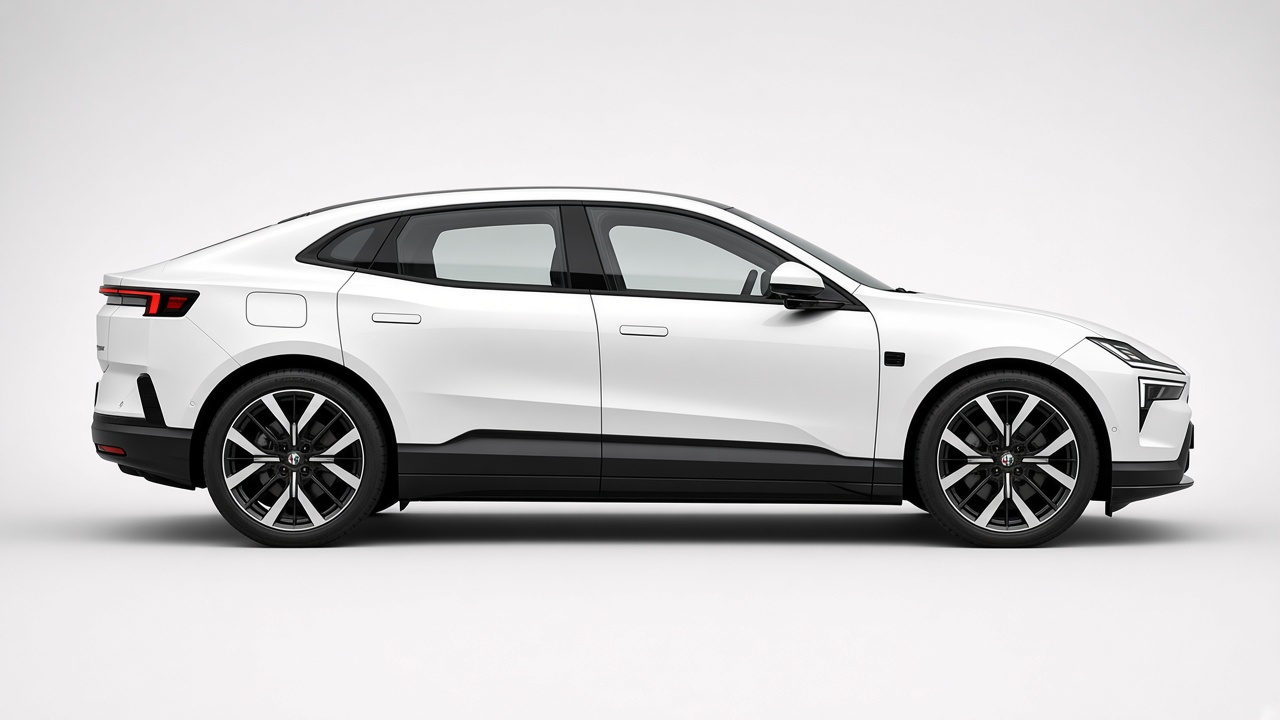
The Polestar 5 is easily one of the most striking cars that has been released all year, in a bit of a mature way. The photos you see through the article don’t really do it all that much justice, but being stuck behind one in traffic – next to a regular car, the long wheelbase and low roofline make it akin to Tim Burton’s Batmobile.
Measuring up to 5087mm long, with a wheelbase of 3054mm, it rivals that of a Kia Carnival people mover, but where the eight-seater has a roof height of 1785mm, the Polestar slinks down to just 1420mm.
It is a giant car inside; the front row is fitted with luxury-sport Recaros that somehow have up to 14 ways of adjustment – about 10 more than just front, back, up and down – mixed with rear buckets offering all the goodies the front gets if you tick some boxes on the order sheet, including: heating, ventilation, massage, and even lumbar adjustment.
Polestar sells this car as a five-seater, clearly being more for four people as you pull down the centre-armrest to reveal a separate control panel for rear-seat dwellers who are also treated to an impressive amount of legroom.
Though unlike many luxury cars, the 5 is best enjoyed from the front, as the driver gets a gorgeous 14.5-inch touchscreen, 9.0-inch cluster, and head-up display. Like the Polestar 4 Coupé, the lack of a rear window makes its way onto this model too, though it sure does make a lot more sense for a streamlined roof in a sports car rather than an SUV.
We only drove cars with the optional real-leather upgrade that ranges between $11,800 and $13,000, depending on what colour you want your sustainable Bridge of Weir cowhide. I was certainly a little shocked to find out that vegan leather is a standard fit instead of the real stuff. Given the price tag of the car; leather should be standard, with pleather left as an option for those who stay away from animal products.
Other than that tidbit, perceived build quality is certainly there for the 5. The sound system is pretty spectacular, along with the choice of a mature and understated interior design, though the audio-player knob sitting alone on the centre console does look like that section of the car was left unfinished.


| Key details | 2026 Polestar 5 Performance |
| Engine | Dual-motor electric |
| Battery pack | 112kWh |
| Driving range | 558km |
| Power | 650kW |
| Torque | 1015Nm |
| Drive type | All-wheel drive |
| Transmission | Single-speed |
| Length | 5087mm |
| Width | 1979mm |
| Height | 1420mm |
| Wheelbase | 3054mm |
Is the Polestar 5 worth it?
I fell a little bit in love with the Polestar 5 just by gazing at it, especially with the optional 22-inch wheels; it looks simply stunning. It’s probably more of a car for those who have hit puberty, as it’s certainly not in your face as much as others, and it takes a certain eye to reveal some of those angry lines hidden throughout. A bit of a monster in a business suit.
However, as is the case with just about every electric car with about a billion kilowatts, it’s not a very emotional experience because it’s just so refined – there’s a lack of liveliness to it when the only real marker of speed is the number on your dash.
I digress, though; that’s where historic grand tourer buyers are probably screaming at the screen right now. The point is utmost refinement, coming back to those borderline-lazy 10- and 12-cylinder engines that used to power this segment – emotion is saved for sports cars, and soul is toned down a bit in GTs for something that is used for what is quite literally in the name: Touring.
If the Polestar 5 is like a quartz watch movement, and something like an Aston Martin Rapide is an automatic movement – there’s no reason the two can’t co-exist for the same buyer.
A F.P.Journe Élégante is still a $200k watch despite being quartz; wearing one of these shows a little more maturity than a TAG Heuer Monaco. Just like the Polestar 5, sure – it’s electric and refined, but if you really want to show off, you can tap that 650kW badge on the side, though I highly doubt the buyer of this car is in the mood to gloat; only those who know will know.


The post 2027 Polestar 5 Performance review: Sweden’s $200k Porsche Taycan killer appeared first on Drive.