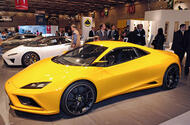
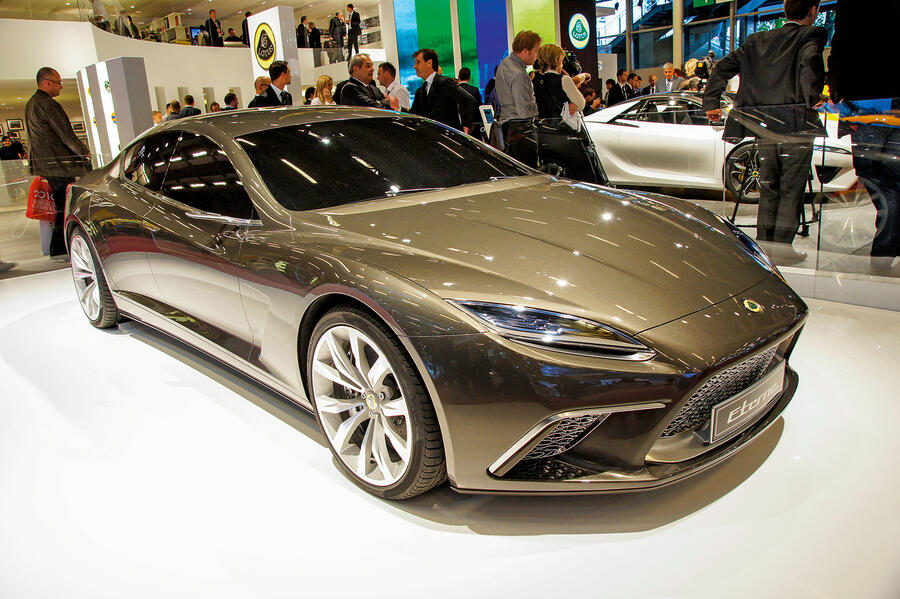
Elan supercar was scrubbed from the plan shortly after its Paris debut (Credit: Getty Images)In 2010, Lotus shocked the automotive industry with six new cars – none of which would ever reach production
At the Paris motor show 16 years ago, the automotive world was stunned as a reborn Audi Quattro, a Jaguar supercar, a new-generation Bentley GT and Renault’s seminal EV were upstaged by little Lotus uncloaking no fewer than six new cars at once.
We had been told to expect a “radical overhaul of the business as it aims to move upmarket and produce cars costing in excess of £100k to compete with the likes of Porsche and Ferrari”, plus a rival to the bizarre Aston Martin Cygnet city car, but still, this was totally unprecedented – and very dubious.
The six concepts were the £40k Elise, a four-cylinder two-seater; the £75k Elan, a mid-engined, V6 2+2; the £115k Elite, a front-engined, V8 hybrid, four-seat coupé; the £120k Eterne, a saloon variation of the Elite; the £100k Esprit, a mid-engined, V8 supercar; and the Proton-based plug-in hybrid City Car (later renamed Ethos).
The cars looked good and were lent further credence by the newly star-studded team of executives behind Lotus. But it had never turned a profit in 14 years under Proton, which was itself strapped for cash, and now it was promising to get six new models to market, some in unfamiliar, more demanding segments, all within just five years, and in turn quadruple its annual sales to around 8000.
Proton had been subjected to a management change in 2006. The new bosses cancelled the Malaysian government-owned car maker’s plan for alliance with Volkswagen or General Motors and within 18 months had realised there were only two stark options for Lotus’s future, we reported: “To hold an immediate fire sale or develop the firm to the extent of its potential. That was when it began talking to Dany Bahar, a sales and marketing chief at Ferrari, and his plan took ‘maybe three months’ to devise.”
The Paris show extravaganza afforded our first interview with Bahar. Steve Cropley admitted: “For a year, we’ve been imagining someone who was fundamentally defensive and arrogant; instead we got a candid, relaxed bloke who was confident of his well-honed plans for Lotus but prepared to admit that they may seem frail to others.
“It remains disquieting that other wise company bosses, looking on, harbour serious doubts. But you’ve got to admire what’s been achieved so far. A comprehensive plan has been approved, big money has been raised, five matching cars have been created and Bahar has been joined by proven experts from firms such as Mercedes, Porsche and Ferrari.”
Full execution of the plan was set to cost £770m, which was claimed to be “fully funded”. Part of that funding was £270m in loans from six Asian banks, underwritten by Proton – whose MD expected Lotus to break even as soon as 2014.
Bahar dropped another bombshell in July 2011: rather than buying in the V6 and V8 from current or new partners, Lotus was to develop its own – and maybe even an inline four.
“This is a big hit, because it’s expensive to do an engine, but because the Elan is not happening now we’ve got capital expenditure head room,” explained Bahar.
Alarm bells were ringing ever louder – yet when Cropley visited Hethel that September, he found that “Bahar’s first year’s targets have been met, the ambitious project to build a bespoke engine range is proceeding rapidly, his team of experts has stayed together (and was joined only the other day by Gordon Murray) and the new buildings that until recently were only lines on a site plan have started to materialise”.
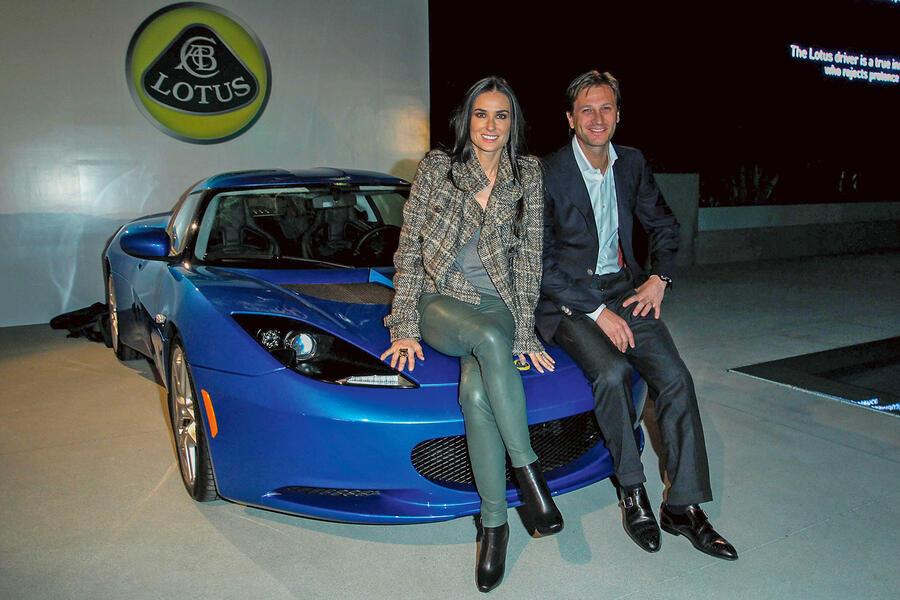
It all started to unravel in January 2012, though, when the Malaysian government “strategically divested” floundering Proton to domestic automotive giant DRB-Hicom.
An ensuing period of unsettling limbo stoked various wild rumours – before Bahar was suspended over “a complaint about his conduct”, with DRB-Hicom executive Aslam Farikullah being parachuted in.
In just the first 18 months, the new parent firm needed to spend £100m keeping Lotus afloat, while “cleaning up” various financial, technical, marketing and product planning problems – by which it meant canning Bahar’s grand plan.
Lotus pulled out of the 2012 Paris show amid marketing budget cuts, yet it still posted a record-breaking £168m loss for the financial year.
It settled out of court with Bahar in May 2014, and none of his shock concepts were ever seen again.